
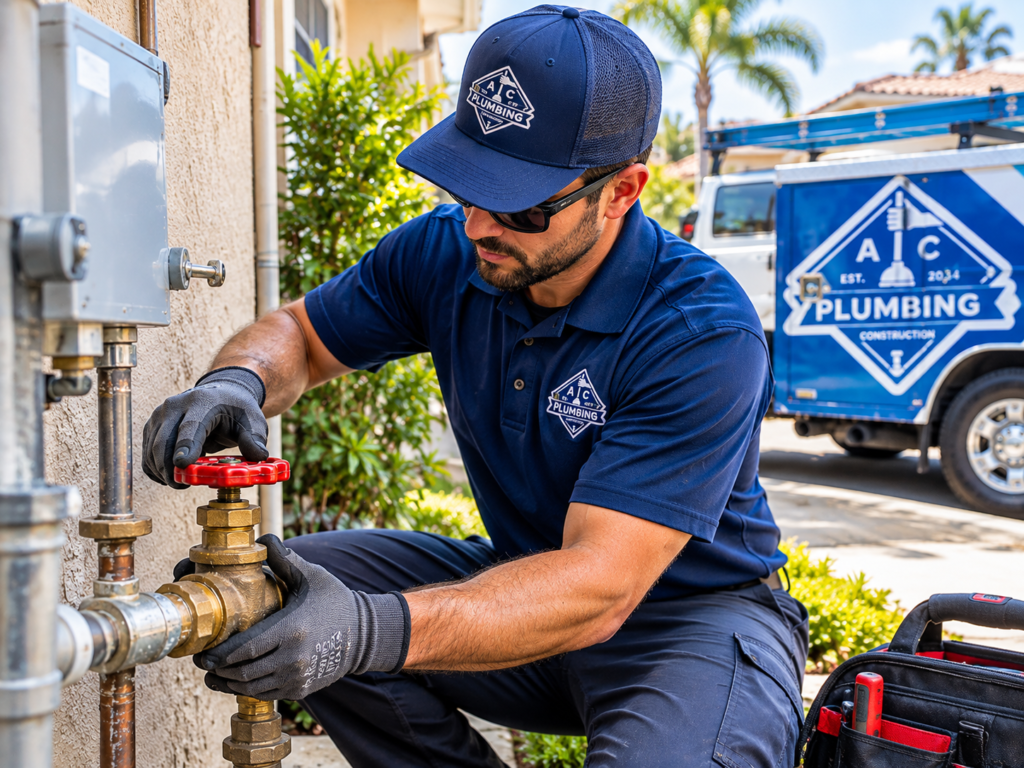
In addition to controlling the water supply to your whole house, the primary purpose of a shut off valve is to prevent further damage from broken pipes and malfunctioning appliances by stopping water supply to your house. Understanding how to locate and operate your shut off valve will enable you to act promptly and protect your property.
How does your house’s shut off valve operate?
The typical residential shut off valve consists of either a ball valve or a gate valve. In general, a ball valve operates by turning a lever. This operation typically requires less than a quarter turn to open or close. A ball valve is usually considered to be in the “open” position when its lever is parallel to the pipe. Conversely, it is usually in the “closed” position when its lever is perpendicular to the pipe. Gate valves typically have a large round wheel handle and require multiple full revolutions to move an interior gate which regulates water flow. Some older gate valves may become sticky or cease sealing entirely due to wear or rust on the internal components. Condition, functionality, and correct installation are much more important than appearance when evaluating a shut off valve.
Do i need to replace my shut off valve?
You don’t necessarily need to replace your shut off valve simply based on age. However, there are some warning signs indicating that it may not function effectively when you need it:
1. Leaks. Any drips or moisture coming out of your shut off valve is a sign of a failure of the seal or an internal component of the valve. A single leak should be addressed immediately.
2. Hard to turn. Sticking handles, grinding, and requiring too much pressure when attempting to turn your shut off valve could be indicative of internal corrosion or wear. Never attempt to force your shut off valve as this can lead to breaking the valve or damaging nearby piping.
3. Won’t completely stop water flow. If you notice that water continues flowing through your system after you have turned your shut off valve to the “off” position, then the mechanisms inside your shut off valve likely have failed or been blocked internally. You will want a professional plumber to evaluate whether repairing or replacing your shut off valve would be best.
4. Damage to the handle or body. Cracks in the handle, a loose stem, severe corrosion, and/or severely damaged connections may render your shut off valve ineffective during an emergency situation.
5. Upgrading your plumbing system. An excellent opportunity to install a new or updated shut off valve exists whenever you plan to upgrade your plumbing system (e.g., repipe, renovate).
Why is having a functioning shut off valve important?
Having a functional shut off valve enables you to stop incoming water supply while you coordinate repairs. This action limits potential damage to flooring, cabinets and personal items within your home. Furthermore, having a functioning shut off valve facilitates access to the shut off valve during other planned plumbing activities (e.g., faucet/pipe repairs).
Should i Check/inspect/test my shut off valve?
If you see evidence of corrosion, damage or sticking within your shut off valve, do not attempt to activate it yourself. While an older shut off valve may appear intact and operational, it may start leaking or fail upon activation following extended periods of non-use.
You should contact a professional plumber who specializes in plumbing services (shut offs) and ask them to evaluate your shut off valve to verify that it properly shuts off the water supply to your home and provide recommendations regarding replacement, if necessary.
When to contact a licensed professional plumber
